Source Sugarcane Bagasse Lunch Container for Restaurants and Catering
Compare 30 listings for Sugarcane Bagasse Lunch Container options from verified Chinese manufacturers. Buyers can evaluate specifications like capacity, weight, and customization features to find the right food packaging solution for restaurants, food trucks, and catering services.
Key considerations
Products List


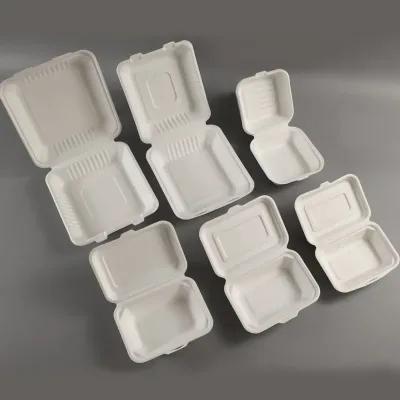


Sugarcane Bagasse Biodegradable Food Containers Takeaway Salad Lunch Box
$0.03 - $0.14
MOQ: 20000 Pieces


Sugarcane Bagasse Lunch Box Sugarcane Container Sugarcane Fibre Tableware
$0.03 - $0.04
MOQ: 50000 Pieces

Disposable Sugarcane Bagasse Lunch Box Food Containers Biodegradable Lunch Box
$0.02 - $0.04
MOQ: 500 Pieces


Disposable Sugarcane Bagasse Food Container Convenient Take Away Lunch Box
$0.04 - $0.04
MOQ: 100000 Pieces

Hot Sale Sugarcane Bagasse Lunch Box Disposable Food Container with Lid
$0.04 - $0.04
MOQ: 100000 Pieces

Wholesale Lunch Box Disposable Sugarcane Bagasse Food Container with Lid
$0.04 - $0.04
MOQ: 100000 Pieces


Comprehensive Sourcing Guide
Strategic Sourcing Guide for Sugarcane Bagasse Lunch Containers
The global shift toward sustainable packaging has elevated sugarcane bagasse lunch containers to a primary choice for businesses seeking to reduce plastic dependency. These containers, derived from the fibrous residue left after crushing sugarcane stalks, offer a robust alternative to polystyrene and traditional paperboard. For procurement professionals, understanding the specific technical attributes, supply chain dynamics, and compliance requirements of these products is essential. This guide synthesizes available market data to provide a structured approach to sourcing high-quality, biodegradable food packaging solutions.
Technical Specifications and Material Composition
The foundation of a successful procurement strategy lies in verifying the technical specifications of the product. The core material for these containers is 100% natural sugarcane bagasse, often referred to simply as bagasse. This material is distinct from recycled paper or virgin wood pulp, offering a unique fibrous structure that provides inherent strength and heat resistance. Buyers must distinguish between products labeled as "100% Natural Sugarcane Bagasse" and those that may contain blended materials or additives.
Key physical attributes observed in the market include specific gram weights and dimensional standards. For instance, certain models exhibit a gram weight of 30.0±2.5g, while others may be lighter at 20±1.5g. These variations directly correlate with the container's durability and its suitability for different food types. Heavier gauges generally support hot, oily, or liquid-heavy meals better than lighter variants. Dimensions also vary significantly; observed specifications include outer box dimensions of 614023.5 mm for specific models, while others measure 328×245×45 mm or 230×131×40 mm. Procurement teams must align these dimensions with their operational needs, ensuring the container fits standard shelving, ovens, and transport logistics.
The shape of the container is another critical specification. The market predominantly features square and rectangular designs, which optimize space utilization during stacking and storage. Some models offer a capacity of 850ml, suitable for full meal portions. Surface finishes can range from plain to embossed textures, which may enhance grip or aesthetic appeal. Additionally, the color profile is typically natural, reflecting the unbleached state of the pulp, though bleached options are available for buyers requiring a specific visual identity. The presence of a "First Grade" paper grade designation suggests a high level of purity, which is vital for food safety and structural integrity.
Compliance, Certification, and Food Safety Standards
When sourcing food contact materials, verifying compliance with international safety standards is non-negotiable. The primary certification explicitly confirmed in the current market data is FDA compliance. This indicates that the material meets the U.S. Food and Drug Administration's requirements for food contact substances, ensuring that no harmful chemicals leach into the food under normal use conditions. Buyers should prioritize suppliers who can provide valid FDA documentation for the specific model number they intend to purchase.
Beyond FDA, the biodegradability of the product is a central selling point. The material is described as 100% biodegradable, a claim that should be supported by third-party testing. While specific standards like ISO 22000, ROHS, EN13432, and ASTM D6400 are mentioned in broader industry contexts, they should not be assumed to apply to every listed product without explicit verification. Procurement officers must request test reports confirming that the product meets the relevant compostability standards for their target market. For example, if the product is destined for the European Union, compliance with EN13432 is typically required. Similarly, for the United States, ASTM D6400 is the benchmark for compostability.
Microwave safety is another critical compliance factor. Some models are explicitly rated as microwave-safe, supporting temperatures up to 200 degrees Celsius. This capability is essential for food service providers who need to reheat meals directly in the packaging. Buyers must verify this claim against the specific product model, as not all bagasse containers possess the same thermal resistance. The absence of a specific temperature rating in the product data should prompt a direct inquiry to the supplier regarding thermal performance limits.
Cost Drivers and Economic Factors
The pricing structure for sugarcane bagasse containers is influenced by several variables, including material costs, production complexity, and order volume. The observed price range in the current market is between 0 and 0.19 USD per unit. This low entry price point makes the product highly competitive against traditional plastic alternatives. However, the final landed cost is heavily dependent on the Minimum Order Quantity (MOQ).
MOQs in this sector vary widely, ranging from 100 units to as high as 100,000 units. A significant portion of the market lists an MOQ of 50,000 pieces, which is typical for manufacturers aiming to optimize production runs and minimize waste. For smaller buyers, finding suppliers with lower MOQs, such as 100 or 500 units, may require negotiating with different tiers of suppliers or accepting higher per-unit costs. The relationship between volume and price is inverse; larger orders typically yield better unit economics.
Additional cost drivers include customization requirements. The availability of custom logos and colors adds value but may increase the unit price due to setup costs for printing or molding. Packaging specifications also play a role; containers packed in cartons versus PE bags may have different handling and shipping costs. Buyers should calculate the total cost of ownership, including shipping, which can be significant given the volume of the product. The "328×245×45 mm" outer dimensions of certain models suggest a compact shipping profile, which can help mitigate freight expenses compared to bulkier packaging.
Typical Applications and Functional Versatility
Sugarcane bagasse lunch containers are designed for a wide array of food service applications. Their primary functions include food packaging, meal storage, and serving, making them versatile tools for various business models. The most common applications identified in the market are for restaurants, food trucks, and catering services. These environments demand packaging that can withstand the rigors of transport and the heat of freshly prepared meals.
The sturdy nature of the bagasse material makes it ideal for carrying hot soups, curries, and fried foods. The natural fibers provide a barrier against grease and moisture, preventing the container from becoming soggy or leaking. This functionality is particularly valuable for take-away and delivery services, where the integrity of the packaging during transit is paramount. The 850ml capacity is well-suited for main course meals, while smaller variants may be used for sides or desserts.
Furthermore, the biodegradable nature of the product aligns with the sustainability goals of modern consumers. Restaurants and catering companies that prioritize environmental responsibility often choose bagasse containers to enhance their brand image. The "Take Away" feature highlighted in product descriptions underscores their suitability for the growing delivery economy. Whether used for hot meals in a restaurant setting or for cold salads in a catering event, the container's ability to maintain food freshness is a key functional attribute. The "Freshness Preservation" feature noted in some models suggests that the material may offer better moisture retention than standard paper alternatives.
Supplier Evaluation and Quality Control
Evaluating suppliers requires a rigorous assessment of their capabilities and track record. The market data indicates that production originates from multiple regions in China, including Guangdong, Tonglu County in Hangzhou, and Fujian. This geographic diversity suggests a robust supply chain, but it also necessitates careful vetting to ensure consistency. Buyers should verify the specific production location of the model they are purchasing, as regional differences can affect quality control standards.
Quality control should focus on the consistency of the raw material. The "Pulp Purity" of unbleached pulp is a critical indicator of quality, ensuring that the product is free from contaminants. The "Veins" of the material, described as plain, should be inspected to ensure there are no irregularities that could compromise structural integrity. Buyers should request samples to test the gram weight, dimensional accuracy, and thermal resistance. The availability of free samples is a positive indicator of supplier confidence and should be utilized to validate product claims before placing a large order.
Certification verification is paramount. While FDA is a confirmed standard, buyers must ensure that the supplier can provide up-to-date documentation for all claimed certifications. The "Warranty" period of 3 years mentioned in some contexts may refer to the shelf life or the durability of the product under specific conditions, but this should be clarified. A reliable supplier will offer transparent information regarding their manufacturing processes, including the "Embossing" surface treatment and the specific "Paper Grades" used.
Long-Term Procurement Considerations
Sourcing sugarcane bagasse containers is not just a transactional decision but a strategic move toward sustainability. Long-term procurement considerations include the scalability of the supply chain and the adaptability of the product to changing regulations. As environmental laws tighten globally, the demand for 100% biodegradable and compostable packaging is expected to grow. Buyers should secure partnerships with suppliers who have the capacity to scale production to meet increasing demand without compromising quality.
Customization capabilities are another long-term factor. The ability to accept customized logos and shapes allows businesses to maintain brand consistency as they expand. The "Customized" attribute found in multiple product listings indicates that suppliers are flexible in meeting specific branding needs. However, buyers should be aware that customization may impact lead times and minimum order quantities.
Finally, the environmental impact of the product lifecycle should be considered. The "100% Biodegradable" claim implies that the product will break down naturally, reducing landfill waste. However, buyers should ensure that the disposal infrastructure in their target markets supports the composting of bagasse products. In regions where industrial composting is not available, the biodegradability claim may not be fully realized. Therefore, understanding the local waste management landscape is crucial for maximizing the environmental benefits of the procurement.
Summary of Key Product Attributes
To facilitate quick reference during the sourcing process, the following table summarizes the key attributes observed in the market for sugarcane bagasse lunch containers.
| Attribute Category | Specific Observation / Range |
|---|---|
| Material | 100% Natural Sugarcane Bagasse / Bagasse |
| Product Name | Biodegradable Sugarcane Bagasse Disposable Box |
| Shape | Square / Rectangle |
| Color | Natural / Bleached / Custom |
| Capacity | 850ml |
| Gram Weight | 20±1.5g to 30.0±2.5g |
| Dimensions | Varies (e.g., 614023.5mm, 328×245×45mm) |
| Certification | FDA (Confirmed) |
| MOQ Range | 100 to 100,000 pcs (Common: 50,000 pcs) |
| Price Range | 0 - 0.19 USD |
| Microwave Safe | Yes (Up to 200°C for specific models) |
| Origin | Guangdong, Zhejiang, Fujian (China) |
| Packing | 500 Per Box / Carton / PE |
| Customization | Logo, Color, Shape Available |
By adhering to these guidelines and verifying the specific details of each supplier, procurement professionals can secure high-quality, sustainable packaging solutions that meet both operational and environmental objectives. The market offers a diverse range of options, but success depends on rigorous due diligence and a clear understanding of the technical and regulatory landscape.
FAQs
What material is used for these lunch containers?
The containers are made from 100% natural sugarcane bagasse. This fibrous residue offers a robust alternative to polystyrene while ensuring the product is biodegradable and suitable for food contact applications.
Can these boxes be used in microwaves?
Yes, specific models are microwave safe and support temperatures up to 200 degrees Celsius. Buyers must verify this rating against the specific product model number before use.
What is the minimum order quantity for these boxes?
The minimum order quantity ranges from 100 to 100,000 pieces depending on the supplier. Many manufacturers list a standard MOQ of 50,000 pieces to optimize production runs.
Which certifications do these containers hold?
FDA compliance is explicitly confirmed for these food contact materials. Buyers should request valid documentation to ensure the specific model meets safety requirements for their target market.
What is the capacity of the standard lunch box?
The standard capacity is 850ml, suitable for full meal portions. Some models may vary, so checking the specific product dimensions and volume is essential for meal planning.
Are custom logos available for these containers?
Customized logos are acceptable for branding purposes. This customization option may impact the unit price and lead time due to additional setup costs for printing or molding.
Where are these products manufactured?
Production originates from regions in China including Guangdong, Zhejiang, and Fujian. Buyers should verify the specific production location to ensure consistency with their quality control standards.